[syndicated profile] guardian_science_feed

Posted by Agence France-Presse in Assisi

Hundreds of thousands of visitors expected for month-long display of 13th-century saint’s remains

Saint Francis of Assisi’s skeleton is going on full public display from Sunday for the first time, in a move that is expected to draw hundreds of thousands of visitors.

Inside a nitrogen-filled case with the Latin inscription “Corpus Sancti Francisci” (the body of Saint Francis), the remains are being shown in the Italian hillside town’s Basilica of Saint Francis of Assisi.

Continue reading...
[syndicated profile] guardian_science_feed

Posted by Tory Shepherd

Following in the wake of the original Golden Records, a new deep-space delivery hopes to introduce a ‘mostly harmless’ humanity to alien life

Do you have a message you want to shout out to the universe? Or whisper into the ear-equivalent of an alien?

In interstellar space, more than 20bn km from Earth, the Voyager spacecraft are whizzing along at more than 50,000 km/h.

Continue reading...
[syndicated profile] guardian_science_feed

Posted by Natricia Duncan Caribbean correspondent

Omar Yaghi’s invention uses ambient thermal energy and can generate up to 1,000 litres of clean water every day

A Nobel laureate’s environmentally friendly invention that provides clean water if central supplies are knocked out by a hurricane or drought could be a life saver for vulnerable islands, its founder says.

The invention, by the chemist Prof Omar Yaghi, uses a type of science called reticular chemistry to create molecularly engineered materials, which can extract moisture from the air and harvest water even in arid and desert conditions.

Continue reading...
[syndicated profile] guardian_science_feed

Posted by Nadeem Badshah

Recruitment of children for study delayed after MHRA warns that participants should be no younger than 14

A clinical trial into puberty blockers for children has been paused after the medicines regulator warned it should have a minimum age limit of 14 because of the “unquantified risk” of “long-term biological harms”.

Discussions between the Medicines and Healthcare products Regulatory Agency (MHRA) and the trial sponsor, King’s College London, will begin next week to discuss the wellbeing concerns, the Department of Health and Social Care (DHSC) said on Friday evening.

Continue reading...

(no subject)

Feb. 21st, 2026 06:23 am
[syndicated profile] apod_feed

[Error: Irreparable invalid markup ('<img [...] ">') in entry. Owner must fix manually. Raw contents below.]

<p class="ljsyndicationlink"><a href="https://apod.nasa.gov/apod/ap260220.html">https://apod.nasa.gov/apod/ap260220.html</a></p><p><a href="https://apod.nasa.gov/apod/ap260220.html"><img src="https://apod.nasa.gov/apod/calendar/S_260220.jpg" align="left" alt=""A ghost in the Milky Way…” says Christian Bertincourt, " border="0" /></a> "A ghost in the Milky Way…” says Christian Bertincourt, </p><br clear="all"/><p class="ljsyndicationlink"><a href="https://apod.nasa.gov/apod/ap260220.html">https://apod.nasa.gov/apod/ap260220.html</a></p>
[syndicated profile] arch_mag_feed

Posted by Jessica Esther Saraceni

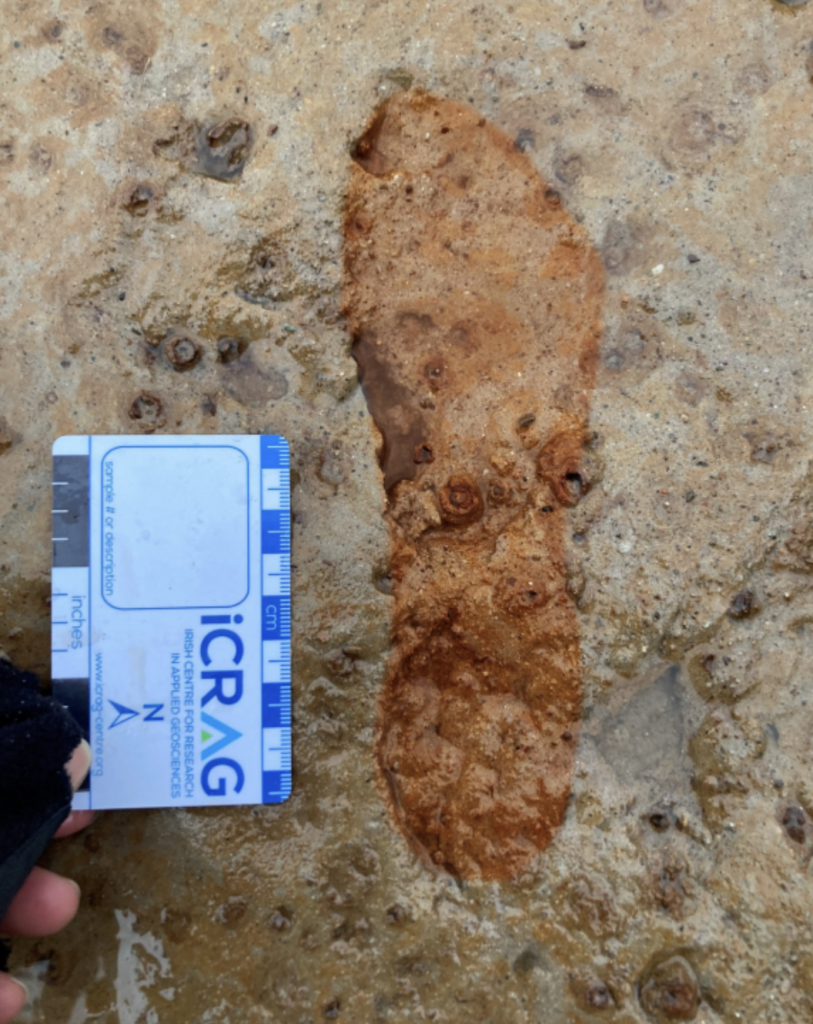
ABERDEEN, SCOTLAND—Erosion caused by storms at eastern Scotland’s Angus Beach revealed an ancient clay surface marked with the footprints of animals and barefooted humans, according to a statement released by the University of Aberdeen. Local dogwalkers spotted the markings in the clay and alerted council archaeologist Bruce Mann, who called in a team from the University of Aberdeen. “We knew we were dealing with a really rare site and that this discovery offered a unique snapshot in time—but it was also clear that the sea would soon take back what had so recently been revealed,” said team leader Kate Britton of the University of Aberdeen. The researchers were able to map the site, take physical casts of the footprints, and capture 3D models of them before the tides and 50-mile-an-hour winds destroyed the ancient ground surface. They were also able to gather plant remains from beneath the layer of the prints for radiocarbon dating, confirming that they were about 2,000 years old. “With sea levels rising and coastal erosion accelerating around Scotland it’s more important than ever that local community members keep an eye on their local coasts and report potential new discoveries,” commented Elinor Graham of the University of Aberdeen. To read in-depth about recent archaeological discoveries in Scotland, go to "Land of the Picts."

The post 2,000-Year-Old Trackway Revealed in Scotland appeared first on Archaeology Magazine.

[syndicated profile] arch_mag_feed

Posted by Jessica Esther Saraceni

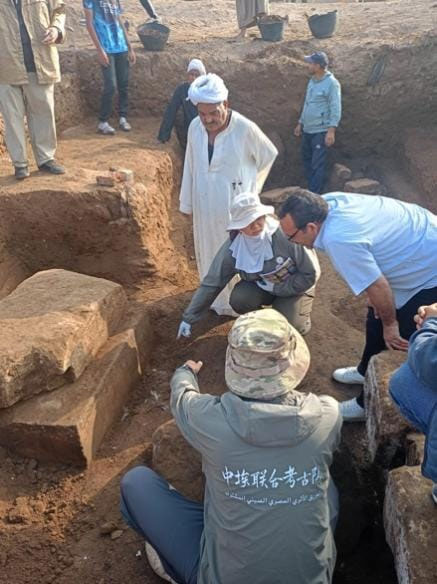
MIT RAHINA, EGYPT—According to an Ahram Online report, an excavation conducted by a team of researchers from Egypt’s Supreme Council of Antiquities, Peking University, and the Shandong Institute of Cultural Relics and Archaeology has uncovered a limestone structure at the site of Tel Aziz that may have been part of a temple dedicated to King Apries of the 26th dynasty, who ruled from about 589 to 570 B.C. The site of Tel Aziz is located in what is thought to have been the center of the ancient city of Memphis. The site also yielded five headless sphinx statues, stone blocks inscribed with hieroglyphic texts dedicated to the god Ptah and cartouches of King Apries, pottery, glass vessels, and copper coins. To read in-depth about the neighboring city of Heliopolis, go to "Egypt's Eternal City."

The post Egyptian King’s Temple Explored in Ancient Memphis appeared first on Archaeology Magazine.

[syndicated profile] arch_mag_feed

Posted by Jessica Esther Saraceni

RAMAT GAN, ISRAEL—According to a statement released by Bar-Ilan University, archaeologist Avi Faust and his colleagues looked for evidence of older adult residents in a building at Tel ‘Eton, a site in south-central Israel. “By analyzing household artifacts rather than skeletal remains, we have a more effective way to identify elders and uncover their roles and influence within the family,” Faust said. In addition to the household artifacts, the team members examined the architecture and activity areas within the dwelling, which had multiple rooms, two floors, and was likely destroyed in the eighth century B.C. during an Assyrian military campaign. Faust and his colleagues also considered ethnographic data about the life of the elderly when interpreting the evidence. The study suggests that three generations of an extended family lived in the house, with a senior couple living and sleeping on the ground floor, in the largest room. The elders would therefore not have had to climb ladders to the rest of the sleeping quarters on the second floor. The researchers also note that this large room had a view of the courtyard and the entrances to the other rooms, perhaps for a matriarch to keep an eye on childcare, cooking, weaving, and other daily activities. Burnt cedar uncovered in the large room may have come from a special chair, while a footbath found there could have offered comfort to aching bones. Faust and his team members conclude that elders were active in this household, by managing resources, supervising domestic work, and maintaining family cohesion. To read more about Iron Age discoveries in Israel, go to "The Philistine Age."

The post Iron Age Dwelling in Israel Offers “Archaeology of the Elderly” appeared first on Archaeology Magazine.

[syndicated profile] guardian_science_feed

Posted by Ramon Antonio Vargas

Authorities suspect Carl Grillmair was shot by man arrested for carjacking, as friends mourn him as ‘irreplaceable’

A renowned California Institute of Technology (Caltech) scientist who studied distant planets and other areas of astronomy for decades was recently shot to death at his home in a rural community outside Los Angeles, authorities said.

Carl Grillmair, 67, died from a bullet wound to the torso on Monday in Llano, an unincorporated community in the Antelope Valley, according to information from the LA county medical examiner’s office. The county sheriff’s department said it had arrested a suspect in Grillmair’s slaying, identifying him as 29-year-old Freddy Snyder.

Continue reading...
[syndicated profile] guardian_science_feed

Posted by Richard Luscombe in Miami

Administrator Jared Isaacman cites ‘major progress’ since earlier discovery of liquid hydrogen leaking from rocket

Nasa said on Friday it was planning to launch its delayed Artemis II moon mission on 6 March after successfully completing a fueling test that had caused it to stand down earlier this month.

Jared Isaacman, the space agency’s newly confirmed administrator, cited “major progress” since the original so-called wet dress rehearsal in which engineers discovered liquid hydrogen leaking from the space launch system (SLS) rocket on its Florida launchpad at Cape Canaveral.

Continue reading...
[syndicated profile] arch_mag_feed

Posted by Jessica Esther Saraceni

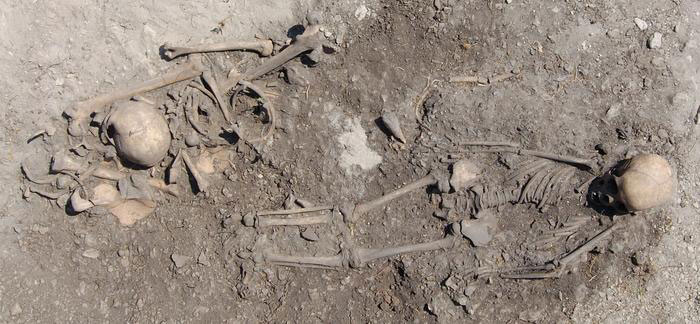
UPPSALA, SWEDEN—According to a Live Science report, geneticist Tiina Mattila of Uppsala University and her colleagues have completed a genetic study of remains recovered from four multiple burials at Ajvide, a 5,500-year-old hunter-gatherer cemetery on the Swedish island of Gotland. In all, just eight of the 85 graves in the cemetery held the bones of more than one person. The first grave in the study held the remains of a woman and two young children. The children were found to be full brother and sister, while the woman may have been their father’s sister or their half-sister. The second grave held the remains of a boy and a girl who were probably cousins. The third grave held the remains of a girl and a young woman who may have been cousins or great-aunt and great-niece. The final grave in the study held the remains of a teenage girl. The bones that had been piled on top of her outstretched form belonged to her father. His remains had probably been dug up and reinterred with his daughter’s. “Surprisingly enough, the analysis showed that many of those who were buried together were second- or third-degree relatives, rather than first-degree relatives—in other words, parent and child or siblings—as is often assumed,” said Helena Malmström of Uppsala University. “This suggests that these people had a good knowledge of their family lineages and that relationships beyond the immediate family played an important role,” she explained. The scientists will continue analyzing the family relationships in the rest of the burials in the cemetery. Read the scholarly paper at the Proceedings of the Royal Society B. To explore more about hunter-gatherers in northern Europe, go to "Mapping a Vanished Landscape."

The post DNA Reveals Kinship Ties in Sweden’s Hunter-Gatherer Cemetery appeared first on Archaeology Magazine.

[syndicated profile] arch_mag_feed

Posted by Jessica Esther Saraceni

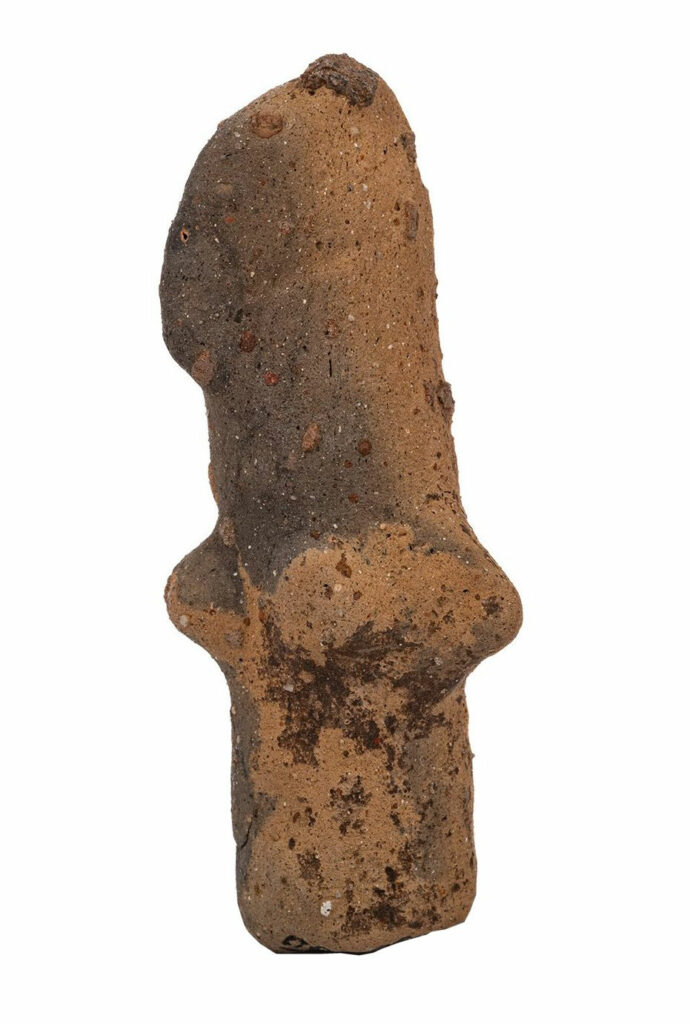
SFÂNTU GHEORGHE, ROMANIA—According to a Greek Reporter article, a 2.5-inch Neolithic figurine depicting a woman with extended arms was discovered in central Romania, among traces of dwellings, pottery, and charcoal dated to between 5800 and 5500 B.C. National Museum of the Eastern Carpathians archaeologists Dan Lucian Buzea, Dan Călin Ştefan, and Puskás Jozsef were investigating the site of Arcuş when they uncovered the settlement, which had been built by the early farmers of the Starčevo-Criş culture. The figurine was made with clay tempered with chaff and sand fired at high temperatures to produce a brick red color, but darker areas suggest that the heat had been uneven. The head of the figurine features eyes carved in a V-shape, a small oval nose, and fine incisions resembling long hair tied into a bun. The body of the figurine is slim with protrusions on the torso. The team members think the figurine may have been used as a household amulet, a ritual object, or a symbolic offering. To read in-depth about Neolithic people in Europe, go to "Neolithic Cultural Revolution."

The post 7,500-Year-Old Figurine Unearthed in Romania appeared first on Archaeology Magazine.

[syndicated profile] arch_mag_feed

Posted by Jessica Esther Saraceni

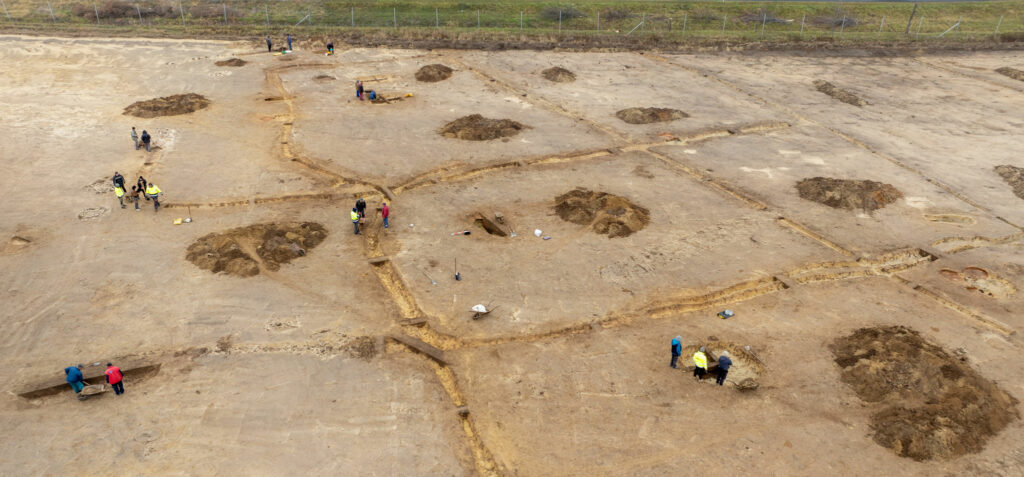
BUDAPEST, HUNGARY—According to a Daily News Hungary report, more than 100 medieval graves and traces of a medieval settlement were discovered during an investigation conducted ahead of a road construction project in northwestern Hungary. Researchers from Hungary’s National Archaeological Institute and the Rómer Flóris Art and Historical Museum reviewed historical records and aerial imagery of the planned route in order to identify possible archaeological sites. Then, they examined the possible sites with geophysical surveys and confirmed them with excavation. The medieval graves have been attributed to the nomads known as the Avars and dated from the eighth through the eleventh centuries. The settlement, including houses, ovens, and ditches, has been dated to the eleventh century, and the rule of the Árpád dynasty. To read more about medieval Hungary, go to "The Avars Advance."

The post Medieval Settlement and Graves Uncovered in Hungary appeared first on Archaeology Magazine.

[syndicated profile] guardian_science_feed

Posted by Nicola Davis Science correspondent

Research adds weight to theory Arrokoth’s two lobes produced by gravitational collapse – and reveals process

It is the most distant and primitive object ever visited by a spacecraft from Earth: now researchers say they have fresh insights into how the ultra-red, 4bn-year-old body known as Arrokoth came to have its distinctive snowman-like shape.

Arrokoth sits in the Kuiper belt, a vast, thick ring of icy objects that lies beyond the orbit of Neptune. This region of space is home to most of the known dwarf planets as well as comets and small, solid rubble heaps called planetesimals – the building blocks of planets.

Continue reading...

Desmond McConnell obituary

Feb. 19th, 2026 04:28 pm
[syndicated profile] guardian_science_feed

Posted by Deirdre Simmen McConnell

My father, Desmond McConnell, who has died aged 95, made a great contribution to mineralogy, inspiring scientists around the world.

At Cambridge University in the 1960s and 70s, with the excellent X-ray diffraction facilities in the Mineralogy Department, he developed work first published by his crystallographer colleagues, Peter Gay and Mike Bown, on the incommensurate behaviour (ie falling outside the usually understood “rules”) of crystal structures. He also made significant advances in understanding a group of minerals known as plagioclase feldspars.

Continue reading...
[syndicated profile] guardian_science_feed

Posted by Ed Pilkington

As Trump slashes science funding, young researchers flee abroad. Without solid innovation, the US could cease to have the largest biomedical ecosystem in the world

In April 2025, less than three months after Donald Trump returned to the White House, the federal Centers for Disease Control and Prevention (CDC) put out its latest public health alert on so-called “superbugs”, strains of bacteria resistant to antibiotics.

These drug-resistant germs, the CDC warned, are responsible for more than 3m infections in the US each year, claiming the lives of up to 48,000 Americans.

Continue reading...
[syndicated profile] guardian_science_feed

Posted by Michael Pollan

Scientists and philosophers studying the mind have discovered how little we know about our inner experiences

What was I thinking? This is not as easy or straightforward a question as I would have thought. As soon as you try to record and categorise the contents of your consciousness – the sense impressions, feelings, words, images, daydreams, mind-​wanderings, ruminations, deliberations, observations, opinions, intuitions and occasional insights – you encounter far more questions than answers, and more than a few surprises. I’d always assumed that my stream of consciousness consisted mainly of an interior monologue, maybe sometimes a dialogue, but was surely composed of words; I’m a writer, after all. But it turns out that a lot of my so-called thoughts – a flattering term for these gossamer traces of mental activity – are preverbal, often showing up as images, sensations, or concepts, with words trailing behind as a kind of afterthought, belated attempts to translate these elusive wisps of meaning into something more substantial and shareable.

I discovered this because I’ve been going around with a beeper wired to an earpiece that sends a sudden sharp note into my left ear at random times of the day. This is my cue to recall and jot down whatever was going on in my head immediately before I registered the beep. The idea is to capture a snapshot of the contents of consciousness at a specific moment in time by dipping a ladle into the onrushing stream.

Continue reading...
[syndicated profile] guardian_science_feed

Posted by Presented by Annie Kelly with Fay Bound Alberti; produced by Ivor Manley, Ruth Abrahams and Ross Burns; executive producer Homa Khaleeli

Face transplant patient Robert Chelsea and writer Fay Bound Alberti talk through the promise – and darker side – of this pioneering surgery

In 2019, Robert Chelsea made medical history, becoming the first black patient to ever have a full face transplant.

He had previously suffered from a devastating car crash, leaving his face severely burnt. Once, he recalls to Annie Kelly, a little boy on the street shouted that he ‘looked like a zombie’.

Continue reading...

(no subject)

Feb. 19th, 2026 05:35 am
[syndicated profile] apod_feed

Cradled in red-glowing hydrogen gas, stars are being born in Orion. Cradled in red-glowing hydrogen gas, stars are being born in Orion.


[syndicated profile] guardian_science_feed

Posted by Presented and produced by Madeleine Finlay, with Ian Sample and Nicola Davis, sound design by Ross Burns, the executive producer was Ellie Bury

Madeleine Finlay sits down with science editor Ian Sample and science correspondent Nicola Davis to discuss three eye-catching stories, including the impact of a powerful psychedelic on depression, answers on the death of Russian opposition leader Alexei Navalny, and an explanation to the mystery of why humans have chins

Single dose of potent psychedelic drug could help treat depression, trial shows

Was Navalny poisoning by frog toxin meant to send a message?

Continue reading...
[syndicated profile] arch_mag_feed

Posted by Jessica Esther Saraceni

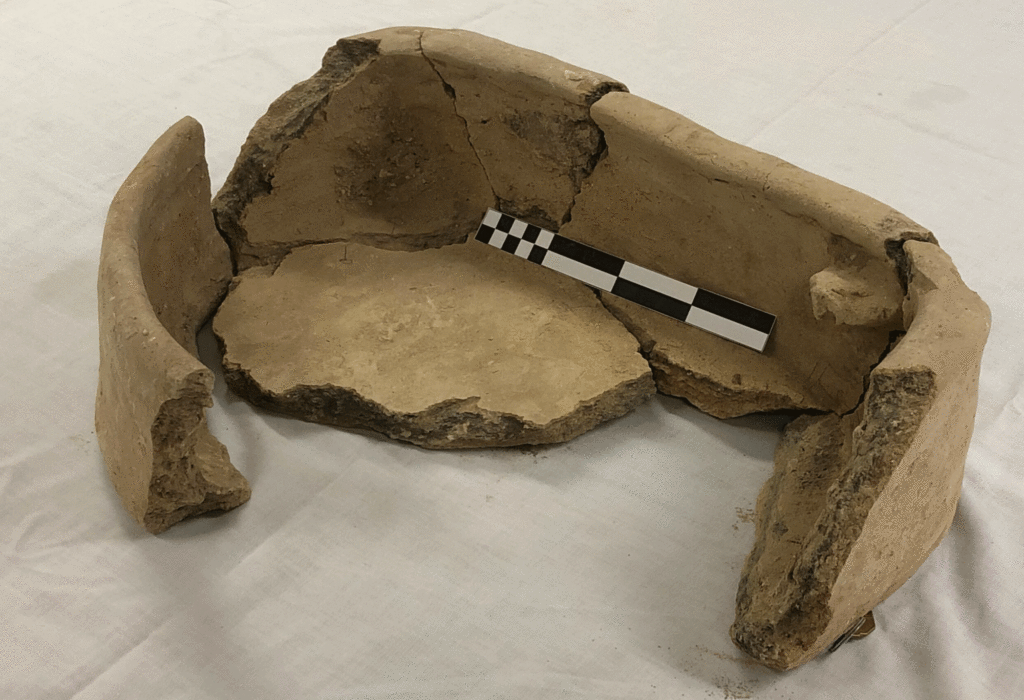
TEL AVIV, ISRAEL—According to a Phys.org report, archaeologists have previously suggested that conical ceramic vessels known as cornets, which have been found at multiple sites in the Levant, could have been used to process dairy, smelt copper, or as beeswax lamps during the Chalcolithic period, between about 4500 and 3600 B.C. Sharon Zuhovitzky, Paula Waiman-Barak, and Yuval Gadot of Tel Aviv University examined cornets and cornet fragments recovered from Teleilat Ghassul, an archaeological site in Jordan. Soot and beeswax were found on some of the pottery, supporting the idea that the vessels were used as lamps. “In my experimental work, beeswax-filled cornets burned for up to nine hours,” Zuhovitzky said. “This duration depends on the quantity and quality of the wax,” she added. The valuable beeswax for the lamps may have been collected from wild hives, or it may have been collected by beekeepers from beehives made from unfired clay, which would not have been preserved, Zuhovitzky argued. “I have suggested that the cornets may have been partially filled with another substance, such as clay, before the wax was added. This would reduce the volume of wax required and improve the lighting function by positioning the flame higher in the vessel,” she concluded. To read in-depth about the Chalcolithic period in the Near East, go to "Ahead of Their Time."

The post Unique Cone-Shaped Vessels May Have Been Beeswax Lamps appeared first on Archaeology Magazine.

[syndicated profile] arch_mag_feed

Posted by Jessica Esther Saraceni

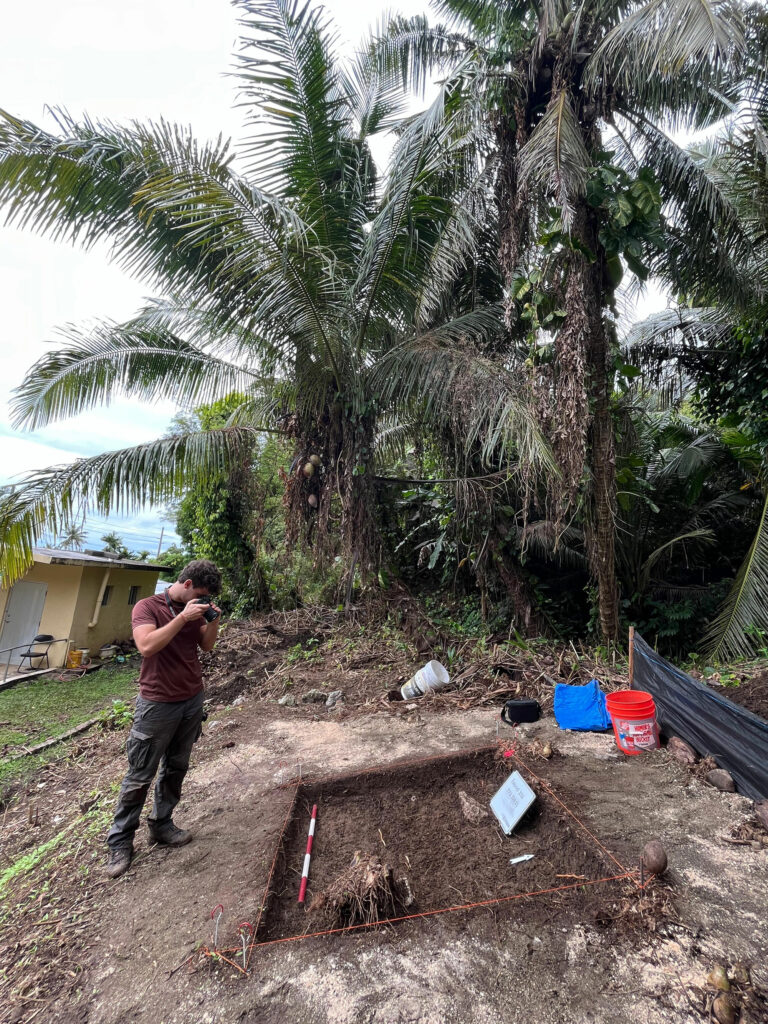
HUMÅTAK, GUAM—The Guam Daily Post reports that a team of researchers made up of scientists from Spain and Guam is investigating the site of the Spanish colonial governor’s palasyo, or palace, in the village of Humåtak, which is located near Guam’s southwestern coastline. “Humåtak functioned as one of the main nodes of colonial administration in Guam, and the Palasyo was a key space where colonial authority was enacted on a daily basis,” said Sandra Monton of Pompeu Fabra University. The team members uncovered the rear wall of the Palasyo, smaller walls that defined activity areas within the building, and traces of local CHamoru communities who lived in the region before the arrival of the Spanish. “While it is still early in the investigation, the archaeological record already suggests a more complex and grounded picture of colonial rule than that offered by administrative documents alone,” Monton said. “The presence of serving and tableware points to banquets and formal meals that staged colonial authority and hierarchy,” she added. Members of the CHamoru community likely prepared food and served at these events hosted by the governor. “These materials hint at unequal relationships of labor and obligation that structured everyday encounters between colonial officials and Indigenous people,” Monton explained. To read more about historical archaeology in the Pacific, go to "Place of the Loyal Samurai."

The post Colonial Palace Site Investigated in Guam appeared first on Archaeology Magazine.

[syndicated profile] arch_mag_feed

Posted by Jessica Esther Saraceni

ATHENS, GREECE—IFL Science reports that a team of researchers led by Romanos K. Antonopoulos and Evangelos Dadiotis of the National and Kapodistrian University were able to use a lye solution made with water and ash to remove the potentially deadly toxins from Claviceps purpurea, a fungus that can grow on barley, and convert them into psychoactive substances. Such hallucinogenic ergot alkaloids have been found on pottery and in dental calculus at an Eleusinian temple in Spain at the site of Mas Castellar de Pontós. Antonopoulos, Dadiotis, and their colleagues think that ancient Greek priestesses may have also been able to treat Claviceps purpurea with lye to render it nontoxic, and administer it to the masses of people who participated in the annual Eleusinian Mysteries, which were held annually in Greece at harvest time. The ritual, as remembered in the oral tradition known as the Homeric Hymn to Demeter, honored the Greek goddess of nature and fertility. Demeter is said to have entered a cave at Eleusis in an effort to rescue her daughter Persephone, who had been abducted by Hades, the god of the underworld. Each year, after traveling some 20 miles from the Sacred Gate in Athens to Eleusis, initiates would commemorate Demeter’s search by entering a special hall for the performance of the secret Eleusinian rite. The researchers suggest that this rite may have included consumption of treated hallucinogenic fungus harvested from infected barley. To read about new discoveries related to Dionysian rites, go to "Pompeii's House of Dionysian Delights."

The post Treated Fungus May Be the Secret to Greece’s Ancient Eleusinian Mysteries appeared first on Archaeology Magazine.

[syndicated profile] guardian_science_feed

Posted by Nicola Davis Science correspondent

Hard disks and magnetic tape have a limited lifespan, but glass storage developed by Microsoft could last millennia

Some cultures used stone, others used parchment. Some even, for a time, used floppy disks. Now scientists have come up with a new way to keep archived data safe that, they say, could endure for millennia: laser-writing in glass.

From personal photos that are kept for a lifetime to business documents, medical information, data for scientific research, national records and heritage data, there is no shortage of information that needs to be preserved for very long periods of time.

Continue reading...